Introduction
The Internet of Things, commonly known as IoT, has changed the way devices communicate, collect information, and perform everyday tasks. From smart home appliances and wearable fitness trackers to industrial machines, connected vehicles, healthcare equipment, and smart cities, IoT technology is becoming an important part of modern digital infrastructure. Behind all these connected devices is a structured system that allows hardware, networks, software, data processing, and cloud platforms to work together. This structure is known as IoT architecture.
Understanding IoT architecture is important because an IoT system is much more than a collection of internet-connected devices. Sensors need to collect information, communication networks need to transfer that information, computing systems need to process it, and applications need to turn the processed data into something useful. If any part of this process is poorly designed, the entire IoT solution can become inefficient, unreliable, insecure, or expensive to maintain.
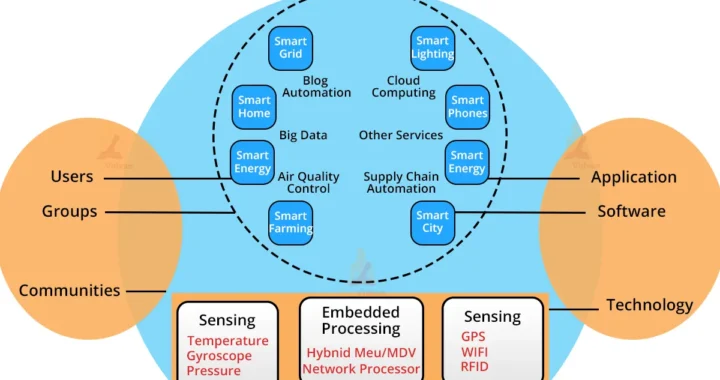
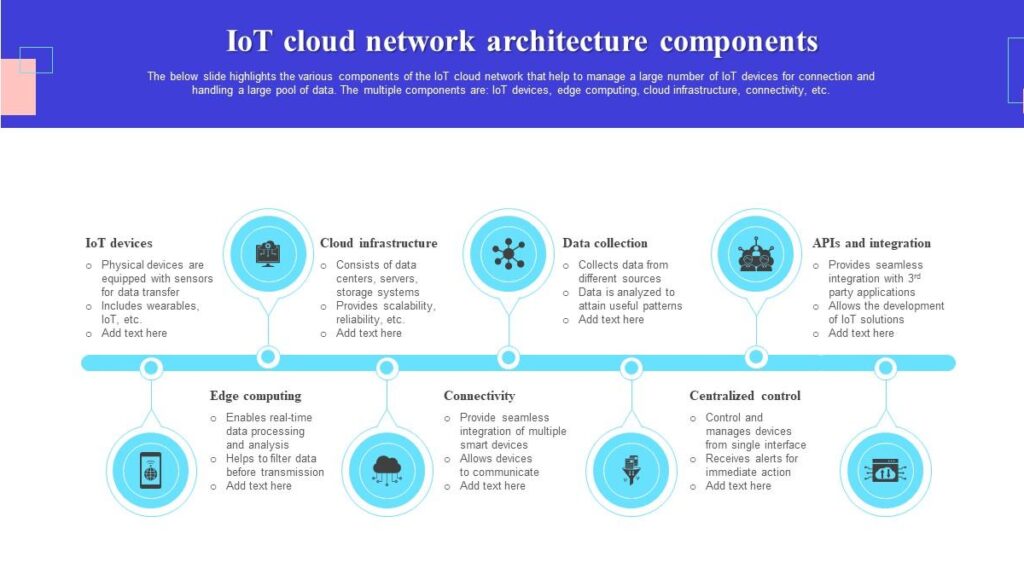
IoT architecture provides a framework for organizing these different components. Although IoT architectures can vary depending on the application, most systems contain several fundamental layers. These commonly include devices and sensors, connectivity and networks, edge or gateway computing, data processing and cloud platforms, and applications. Security and device management operate across these layers to help protect the system and keep it functioning properly.
In this article, we will explore IoT architecture in detail, including its major components, how IoT devices communicate with networks, the role of gateways and edge computing, how cloud platforms process IoT data, common IoT protocols, security considerations, real-world applications, benefits, challenges, and the future of connected systems.
What Is IoT Architecture?
IoT architecture is the organized framework that describes how connected devices, communication networks, data processing systems, cloud platforms, applications, and users interact within an Internet of Things environment. It defines how data moves from a physical device to a processing platform and eventually becomes useful information for people or automated systems.
An IoT system usually begins in the physical world. Sensors may measure temperature, humidity, movement, pressure, location, light, sound, energy consumption, or other conditions. These measurements are converted into digital data and transmitted through a communication network. Depending on the system, the data may first pass through a gateway or edge computing device before reaching a cloud platform or local server.
Once the information reaches a processing environment, software analyzes and stores it. Analytics systems can identify patterns, detect unusual activity, generate alerts, or support automated decisions. Finally, an IoT application presents the information to users through dashboards, mobile applications, websites, control systems, or other interfaces.
The basic flow can therefore be understood as:
Physical environment → Sensors and devices → Network → Gateway or edge → Cloud/data platform → Application → User or automated action
This architecture makes it possible for physical objects to become part of a connected digital ecosystem.
Why Is IoT Architecture Important?
IoT architecture is important because connected systems can involve thousands or even millions of devices. Without a well-designed architecture, managing these devices and the data they produce would be extremely difficult.
A good architecture helps organizations determine where data should be collected, how it should travel, where it should be processed, how it should be stored, and how applications should use it. It also helps developers address important requirements such as scalability, reliability, security, performance, and cost.
For example, consider a smart factory containing hundreds of machines. Sensors attached to those machines may continuously monitor vibration, temperature, pressure, and operating speed. Sending every piece of raw sensor data directly to a cloud platform could consume significant bandwidth and create unnecessary processing costs. An edge gateway could analyze the data locally and send only important information to the cloud.
Similarly, a smart home system may need to respond quickly when a motion sensor detects movement. Local processing can provide a faster response than sending every event to a remote server first.
Therefore, IoT architecture is not simply about connecting devices to the internet. It is about designing an efficient system in which devices, networks, computing resources, data platforms, and applications work together.
Major Layers of IoT Architecture
There are different models for describing IoT architecture. Some educational models use three layers, while others use four, five, or more layers. A practical modern IoT architecture can be understood through several major components: the device layer, connectivity layer, edge or gateway layer, data processing and cloud layer, application layer, and management and security functions.
1. Device and Sensor Layer
The device layer is the foundation of IoT architecture. It includes physical objects, sensors, actuators, embedded systems, machines, and other connected equipment that interact with the physical environment.
Sensors collect information from the surrounding environment. For example, a temperature sensor measures temperature, a humidity sensor measures moisture in the air, a motion sensor detects movement, and a pressure sensor measures force or pressure.
IoT devices can range from very simple sensors to sophisticated industrial machines. A smart thermostat may contain temperature and humidity sensors, while an industrial IoT device may include multiple sensors, processors, storage components, and communication modules.
The device layer can perform several important functions. It can collect measurements, perform basic calculations, communicate with other devices, receive commands, and control physical equipment.
Sensors in IoT
Sensors are particularly important because they provide the data that makes IoT systems useful. Without sensor data, many IoT applications would have no information about the physical environment.
Common IoT sensors include temperature sensors, humidity sensors, light sensors, proximity sensors, motion sensors, pressure sensors, accelerometers, gyroscopes, gas sensors, sound sensors, cameras, and location sensors.
Different industries use different types of sensors. Agriculture systems may use soil moisture sensors, weather sensors, and crop-monitoring devices. Healthcare systems may use wearable sensors to collect information about activity and vital measurements. Manufacturing facilities may use vibration and temperature sensors to monitor industrial machinery.
Actuators in IoT
Sensors collect information, while actuators allow IoT systems to take physical action.
An actuator can control a motor, valve, switch, lock, pump, light, heating system, or other physical mechanism. For example, a smart irrigation system may use soil sensors to determine whether a field is dry and then activate a water pump through an actuator.
This creates a complete feedback loop:
Sense → Analyze → Decide → Act
This ability to connect digital decisions with physical actions is one of the most powerful characteristics of IoT.
Connectivity and Network Layer
After data is collected by sensors and devices, it needs to travel to another device, gateway, server, or cloud platform. This is the role of the connectivity layer.
IoT networks can use many different communication technologies. The appropriate technology depends on factors such as distance, power consumption, bandwidth, cost, reliability, and environmental conditions.
Wi-Fi is commonly used for connected devices in homes, offices, and businesses. Bluetooth and Bluetooth Low Energy are useful for short-range communication, particularly with wearable devices and personal electronics.
Zigbee and similar low-power wireless technologies are often used in smart home and building automation applications. Cellular networks can support IoT devices that need connectivity across larger geographic areas.
Technologies such as NB-IoT and LTE-M are designed to support certain types of cellular IoT applications where low power consumption and wide coverage are important.
Long-range low-power technologies such as LoRaWAN can be useful for applications that transmit small amounts of data over relatively long distances, including agriculture and environmental monitoring.
Ethernet can also be used when wired connectivity is preferred, particularly in industrial and fixed installations.
IoT Communication Protocols
Communication protocols define how devices exchange information. Different protocols are suitable for different IoT environments.
MQTT, or Message Queuing Telemetry Transport, is widely used in IoT because it is lightweight and designed for efficient message communication. It follows a publish-and-subscribe model in which devices can publish messages and other systems can subscribe to them.
CoAP, or Constrained Application Protocol, is designed for constrained devices and networks. It provides a lightweight approach for communication in resource-limited environments.
HTTP and HTTPS can also be used by IoT systems, particularly when devices communicate with web services and cloud APIs.
The choice of protocol depends on the requirements of the IoT application. A small battery-powered sensor may require a lightweight communication method, while a high-bandwidth camera system may need a network capable of transferring large amounts of data.
Gateway and Edge Computing Layer
Between IoT devices and cloud platforms, many systems use gateways or edge computing devices. This layer is especially important when devices have limited processing power, use different communication protocols, or generate large quantities of data.
An IoT gateway acts as a bridge between devices and other parts of the network. It can collect information from multiple sensors, convert communication protocols, filter data, provide security functions, and send information to cloud services.
For example, imagine a manufacturing facility with hundreds of sensors. Instead of every sensor independently communicating with the cloud, sensors can communicate with a local gateway. The gateway can organize and process the information before sending selected data to the cloud.
What Is Edge Computing?
Edge computing moves data processing closer to where data is generated. Instead of sending every piece of information to a distant cloud server, an edge device can analyze some information locally.
This can reduce latency and bandwidth requirements.
Suppose an industrial machine has a sensor that detects dangerous vibration. If the system waits for the information to travel to a remote cloud server and back before taking action, the response may be slower than necessary. An edge computer can analyze the sensor data locally and immediately trigger an alarm or shutdown procedure when predefined conditions are detected.
They can also reduce cloud costs because only relevant information needs to be transmitted.
Edge Computing vs Cloud Computing
Edge computing and cloud computing are not necessarily competing approaches. Modern IoT systems often use both.
Edge devices are useful for fast, local processing, while cloud platforms are useful for large-scale storage, advanced analytics, centralized management, and long-term data analysis.
A practical architecture may therefore look like this:
Sensors → Edge Gateway → Local Processing → Cloud Platform → Analytics → Application
This hybrid approach allows an IoT system to balance speed, scalability, and resource efficiency.
Cloud and Data Processing Layer
The cloud layer provides computing resources, storage, analytics, databases, device management services, and other capabilities required by large IoT systems.
IoT devices can generate enormous amounts of data. A single sensor may produce only a small amount of information, but thousands or millions of devices can generate significant volumes of data over time.
Cloud platforms provide scalable infrastructure for storing and processing this information.
Once data reaches the cloud, it can be stored in databases or other storage systems. Software can then analyze the data to identify trends, patterns, relationships, and unusual events.
For example, a fleet management company may collect location, speed, fuel consumption, engine information, and driving data from thousands of vehicles. Cloud-based analytics can process this information and provide dashboards for fleet managers.
IoT Data Processing
Data processing is one of the most important stages of IoT architecture. Raw sensor data is not always immediately useful. It often needs to be cleaned, filtered, transformed, combined, and analyzed.
For example, a temperature sensor might report readings every few seconds. An IoT system may calculate average temperature, identify unusually high values, compare current readings with historical data, and generate an alert when a threshold is exceeded.
Advanced systems can use machine learning to identify patterns that are difficult to detect through simple rules.
IoT Data Storage
IoT systems may use several types of storage depending on their requirements. Time-series databases are useful for data collected continuously over time, such as temperature or energy measurements.
Cloud object storage can be used for large files such as images and video. Relational or NoSQL databases can support applications that require structured or flexible data storage.
Data retention policies are also important. Not all sensor data needs to be stored permanently. Organizations may keep detailed data for a limited period while retaining summarized information for longer-term analysis.
Application Layer
The application layer is where users interact with IoT systems. It converts processed data into useful information, visualizations, notifications, controls, and automated workflows.
IoT applications can take many forms. A smart home application may allow users to control lights, thermostats, cameras, and locks. An industrial dashboard may show machine health and production information. A logistics application may display the location and status of vehicles.
The application layer can also generate alerts. For example, if a connected refrigerator in a food storage facility reaches an unsafe temperature, the system can notify an employee.
Applications may be accessed through websites, mobile apps, desktop software, dashboards, voice interfaces, or industrial control systems.
Management and Security Layer
Although security and management can be considered separate components rather than a single architectural layer, they operate across the entire IoT system.
IoT device management includes registering devices, configuring them, monitoring their status, updating firmware, managing credentials, and removing devices when they are no longer needed.
Security is equally important because IoT devices can become targets for attackers. A poorly protected device may provide unauthorized access to other parts of a network.
Important IoT security practices include secure device authentication, encrypted communication, access control, secure firmware updates, vulnerability management, network segmentation, monitoring, and appropriate data protection.
Security should be considered during the architecture and design stage rather than added after the system has already been deployed.
How IoT Architecture Works
To understand IoT architecture more clearly, consider a smart agriculture system.
A farmer may install soil moisture sensors throughout a field. These sensors periodically measure the amount of moisture in the soil.
The sensors send their readings through a wireless communication network to a local gateway. The gateway collects the data and may perform initial processing.
If the moisture level falls below a configured threshold, the gateway can send the information to a cloud platform. The cloud stores the data and analyzes it alongside historical readings and other environmental information.
A dashboard then displays the condition of the field. If the system is connected to an irrigation controller, the platform or local gateway can send a command to activate irrigation equipment.
The complete process demonstrates how the different parts of IoT architecture cooperate:
Sensor → Network → Gateway → Cloud → Analytics → Application → Actuator
The same general pattern can be adapted to many industries.
IoT Architecture Example: Smart Home
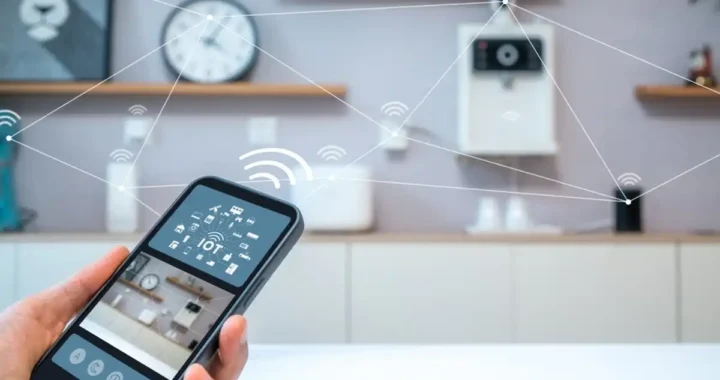
A smart home is one of the easiest examples of IoT architecture.
Consider a smart lighting system. Motion sensors detect movement in a room. The sensor sends information through a wireless network to a smart hub or directly to another connected system.
The system determines whether the lights should be turned on. A command is then sent to a smart light or switch.
A mobile application may allow the homeowner to monitor or control the lights remotely. Cloud services can provide remote access, device synchronization, automation rules, and data storage.
In some systems, local processing allows basic automation to continue even if the internet connection is temporarily unavailable.
IoT Architecture Example: Industrial IoT
Industrial IoT, often called IIoT, uses connected sensors and machines to improve industrial operations.
A factory may install sensors on machines to measure vibration, temperature, pressure, electrical consumption, and operating conditions.
The sensors send information to industrial gateways or edge computers. The edge layer can detect abnormal conditions quickly and communicate with local control systems.
Relevant information can also be transmitted to a cloud platform where long-term analysis and predictive maintenance models are performed.
By analyzing machine data over time, organizations can identify patterns associated with equipment problems and schedule maintenance before a major failure occurs.
IoT Architecture Example: Healthcare
IoT architecture is also used in healthcare applications. Connected medical equipment and wearable devices can collect information and transmit it to authorized systems.
For example, a wearable device can collect activity information and transmit it to a smartphone or cloud platform. Healthcare-related IoT systems can also involve connected monitoring equipment in clinical environments.
Because healthcare information can be highly sensitive, security, privacy, authentication, access control, and regulatory requirements are particularly important when designing these systems.
IoT Architecture Example: Smart Cities
Smart city systems can use IoT architecture to monitor and manage infrastructure.
Connected sensors can collect information about traffic, parking availability, environmental conditions, street lighting, waste management, water systems, and energy consumption.
Data can be transmitted through wireless or wired networks to edge systems and cloud platforms. City management applications can then use this information to monitor infrastructure and support operational decisions.
A smart lighting system, for example, can use sensors to detect environmental conditions or activity and adjust lighting according to configured rules.
Benefits of a Well-Designed IoT Architecture
A well-designed IoT architecture can provide several benefits.
One important benefit is scalability. Organizations can design systems that support additional devices as their IoT deployments grow.
Another benefit is improved efficiency. Automated data collection reduces the need for manual monitoring and can help organizations identify operational problems.
IoT architecture can also support real-time monitoring. Organizations can receive information from devices as events occur and respond accordingly.
Data-driven decision-making is another major advantage. Instead of relying only on assumptions or periodic manual inspections, organizations can analyze continuous data from connected systems.
Automation can further improve operations by allowing systems to respond to predefined conditions without requiring constant human intervention.
Challenges of IoT Architecture
Despite its benefits, IoT architecture also presents several challenges.
One challenge is device scalability. Managing a few connected devices is relatively simple, but managing thousands or millions requires automated provisioning, monitoring, updating, and security processes.
Connectivity is another challenge. Some IoT devices operate in remote locations where reliable internet access may not always be available.
Power consumption can also be a major concern. Battery-powered sensors may need to operate for months or years without frequent battery replacement.
Data management is another difficulty. IoT systems can generate large volumes of information, making storage, processing, filtering, and analysis important architectural considerations.
Security remains one of the most significant challenges. Every connected device can potentially become part of an attack surface if it is poorly secured.
Interoperability is another issue. IoT environments may contain products from different manufacturers using different protocols, platforms, and data formats. Designing systems that can communicate across these technologies can require additional integration work.
IoT Security Architecture
Security should be incorporated throughout the IoT architecture.
At the device level, manufacturers and developers should use secure configurations, strong authentication, protected credentials, and secure firmware mechanisms.
The network level, encrypted communication, firewalls, segmentation, and access controls can help protect data and devices.
At the cloud level, identity management, authentication, authorization, monitoring, encryption, and secure APIs are important.
Applications should also enforce appropriate access permissions and protect sensitive information.
Regular software and firmware updates are essential because vulnerabilities can be discovered after devices have already been deployed.
A strong IoT security architecture follows a defense-in-depth approach, meaning that multiple security mechanisms protect different parts of the system rather than relying on one security control.
The Role of Artificial Intelligence in IoT Architecture
Artificial intelligence is increasingly being integrated with IoT systems. The combination is sometimes described as AIoT, or Artificial Intelligence of Things.
Traditional IoT systems collect data and follow predefined rules. AI-enabled systems can analyze large datasets and identify patterns that may not be obvious through simple rules.
For example, machine learning can be used to analyze industrial sensor data and identify unusual patterns associated with potential equipment failures.
AI can also support image analysis, demand forecasting, anomaly detection, energy optimization, traffic management, and other applications.
Edge AI is another emerging approach. Instead of sending all information to a cloud platform for analysis, some AI models can run directly on edge devices.
This can reduce latency and help minimize the amount of sensitive or high-volume data transmitted across networks.
IoT Architecture and 5G
Modern cellular technologies, including 5G, can support IoT applications requiring high connectivity, low latency, and large-scale device deployments.
5G can be useful for applications such as connected vehicles, industrial automation, smart infrastructure, and other systems where network performance is important.
However, not every IoT application requires 5G. Low-power sensors transmitting small amounts of information may be better suited to other connectivity technologies.
The appropriate network technology should therefore be selected according to the specific requirements of the IoT system.
IoT Architecture Best Practices
Designing an effective IoT architecture requires careful planning.
First, organizations should clearly define what the system needs to accomplish. The choice of sensors, networks, cloud services, and processing technologies should follow the application’s requirements.
Second, scalability should be considered from the beginning. A system designed for ten devices may not work efficiently when expanded to thousands.
Third, security should be included throughout the architecture. Authentication, encryption, access control, secure updates, and monitoring should not be treated as optional additions.
Fourth, organizations should determine which data needs to be processed locally and which information should be sent to the cloud.
Fifth, device management should be automated whenever possible. Large deployments require tools for provisioning, monitoring, configuration, updating, and retirement.
Finally, organizations should consider interoperability and avoid unnecessary dependence on technologies that make future integration difficult.
Future of IoT Architecture
IoT architecture will continue to evolve as connected devices become more powerful and networks become more capable.
Edge computing is likely to remain an important part of future architectures because organizations increasingly need fast processing close to where data is generated.
AI will also play a growing role in analyzing IoT data and supporting automation.
The number and variety of connected devices are expected to continue increasing across homes, industries, transportation, healthcare, agriculture, energy, and infrastructure.
Future IoT systems are also likely to become more distributed. Instead of relying entirely on centralized cloud platforms, applications may distribute processing across devices, gateways, edge servers, and cloud infrastructure.
Security will remain a central requirement as connected environments become larger and more complex.
Interoperability will also become increasingly important because organizations need different devices and platforms to communicate with one another.
Conclusion
IoT architecture provides the foundation that allows connected devices, networks, edge systems, cloud platforms, applications, and users to work together. It transforms raw information from physical devices into useful data that can support monitoring, automation, analytics, and decision-making.
The architecture generally begins with sensors and devices that collect information from the physical environment. Communication networks then transport the information, while gateways and edge systems can process data close to its source. Cloud platforms provide large-scale storage, computing, analytics, and device management capabilities. Applications turn processed data into dashboards, alerts, controls, and other useful services.
There is no single IoT architecture that fits every application. A smart home, industrial facility, connected vehicle, healthcare system, and smart city may all require different combinations of devices, networks, edge computing, cloud infrastructure, and applications.
The most effective IoT architectures are designed around the specific requirements of the system. Scalability, reliability, security, connectivity, data management, device management, and interoperability all need to be considered from the beginning.
As edge computing, artificial intelligence, advanced connectivity, and cloud technologies continue to develop, IoT architecture will become increasingly sophisticated. Understanding how devices, networks, gateways, edge systems, cloud platforms, and applications work together provides a strong foundation for understanding the broader world of the Internet of Things.