The Internet of Things, commonly known as IoT, has changed the way people interact with technology, devices, businesses, and even their surrounding environments. From smart home devices and fitness trackers to industrial machines, connected vehicles, healthcare equipment, and agricultural systems, IoT technology is becoming part of everyday life. At the center of many of these connected systems are IoT sensors. These small but important components allow physical objects to detect changes in their surroundings, collect information, and send that information to other devices or digital platforms. Understanding how IoT sensors work and why they matter is important for anyone interested in smart technology, automation, artificial intelligence, connected devices, or the future of digital systems.
IoT sensors act as the eyes, ears, and measuring instruments of an Internet of Things system. A connected device may be able to communicate over a network, but it needs some way to understand what is happening in the physical world. Sensors provide that capability. They can measure temperature, humidity, movement, light, pressure, sound, location, vibration, air quality, and many other physical or environmental conditions. Once a sensor collects information, the data can be processed locally or transmitted through a network to software, cloud platforms, mobile applications, or other connected devices. This creates a continuous connection between the physical world and digital systems.
What Are IoT Sensors?
IoT sensors are hardware components designed to detect and measure changes in the physical environment and provide that information to an Internet of Things system. A sensor may monitor one specific condition or combine several sensing capabilities in a single device. For example, a smart thermostat may use temperature and humidity sensors to understand indoor conditions, while a fitness tracker may use motion, heart-rate, and location-related sensors to collect information about a user’s activity.
The basic purpose of an IoT sensor is simple: it collects information from the real world. However, the process becomes much more powerful when that information is connected to a network and software. Instead of simply displaying a temperature reading on a local screen, an IoT temperature sensor can send the measurement to a cloud platform. The software can analyze the data, compare it with previous measurements, generate an alert, or automatically trigger another device.
This ability to connect physical measurements with digital systems is what makes IoT sensors so important. Without sensors, many IoT applications would have limited awareness of their surroundings. Sensors allow connected systems to observe conditions continuously and respond based on real-world information.
How Do IoT Sensors Work?
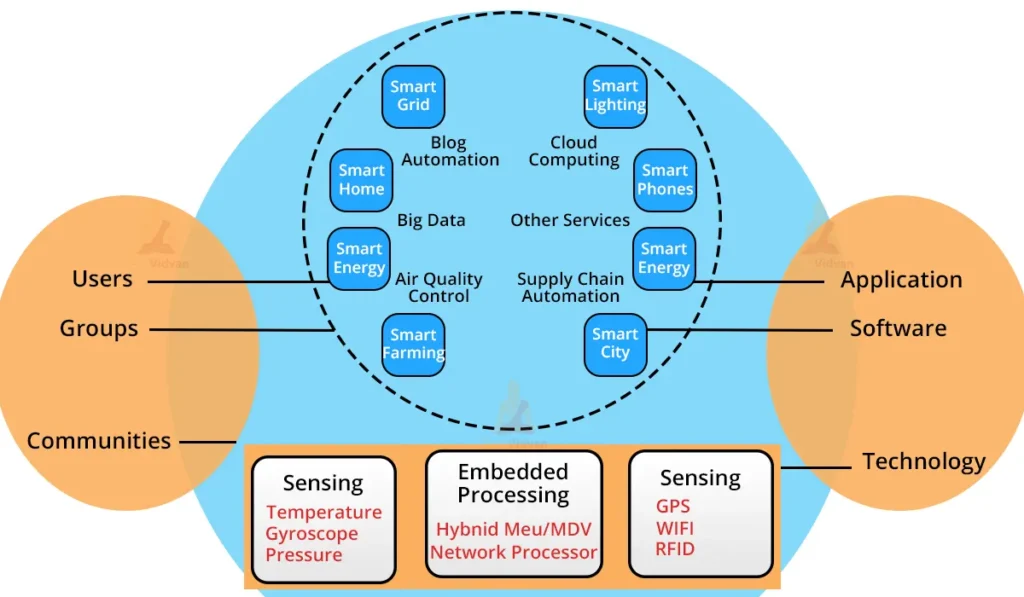
The process of how IoT sensors work can be understood through several basic stages: sensing, converting, processing, communicating, analyzing, and responding. Although different IoT systems use different hardware and communication technologies, the general concept remains similar.
First, a sensor detects a physical condition. This could be temperature, motion, pressure, light, sound, humidity, vibration, or another measurable property. The sensor converts the physical change into an electrical signal or another form of measurable data. Depending on the type of sensor, the resulting signal may be analog or digital.
The sensor’s data may then be processed by a microcontroller or another computing component. Processing can involve filtering unwanted signals, converting measurements into useful units, checking whether a value has crossed a specific threshold, or preparing the information for transmission. Once the data has been prepared, the IoT device can send it through a communication technology such as Wi-Fi, Bluetooth, Zigbee, cellular networks, LoRaWAN, or another suitable connection.
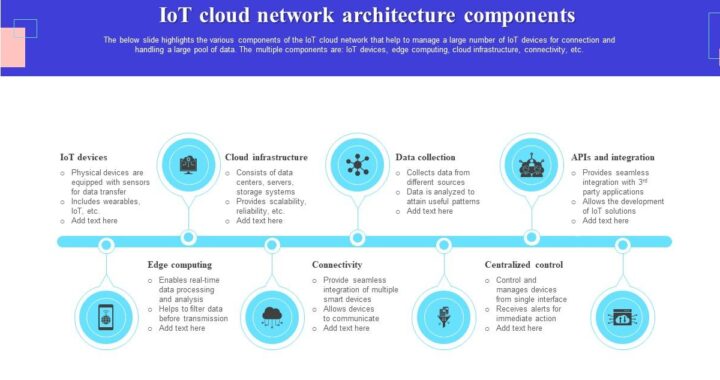
The information may travel to an edge computing device, local server, gateway, or cloud platform. Software can then analyze the data and determine whether an action is necessary. For example, if an industrial temperature sensor detects that a machine is becoming dangerously hot, the system could send an alert to an operator or automatically activate a cooling mechanism.
This process can happen continuously, sometimes within seconds or even milliseconds. As a result, IoT systems can provide real-time or near-real-time information about physical environments.
The Basic Components of an IoT Sensor System
An IoT sensor system normally involves more than the sensor itself. Several components work together to collect, process, transmit, and use data. The sensor is responsible for detecting a physical condition, while a microcontroller or processor may handle the collected information.
A communication module allows the device to transmit information. Depending on the application, this may involve Wi-Fi, Bluetooth, cellular communication, Zigbee, Thread, LoRaWAN, Ethernet, or another networking technology. Some sensors communicate directly with a network, while others send information to a gateway that handles communication with the internet.
Power is another important component. IoT sensors may receive electricity from a wired power source, battery, rechargeable battery, solar panel, or energy-harvesting technology. Battery-powered sensors are especially useful in locations where connecting to electrical infrastructure would be difficult.
Finally, IoT sensor systems usually connect to software. This could be a smartphone application, web dashboard, local server, cloud platform, or specialized industrial system. Software allows users and organizations to view, analyze, store, and act on sensor information.
Common Types of IoT Sensors
There are many different types of IoT sensors because connected systems need to measure many different physical conditions. Each sensor type is designed for a particular purpose, although some modern IoT devices combine several sensors.
Temperature Sensors
Temperature sensors measure the temperature of an environment, object, machine, or material. They are widely used in smart homes, industrial facilities, agriculture, logistics, healthcare, data centers, and food storage.
For example, a smart building can use temperature sensors to monitor rooms and automatically adjust heating or cooling systems. In supply-chain applications, temperature sensors can monitor products that must remain within a specific temperature range during transportation.
Humidity Sensors
Humidity sensors measure the amount of moisture in the air. They are commonly used alongside temperature sensors because temperature and humidity often affect each other and can influence environmental conditions.
Smart buildings can use humidity sensors to improve indoor comfort and help identify excessive moisture. Agriculture systems can monitor humidity to support better growing conditions, while industrial environments can use humidity monitoring to protect equipment and materials.
Motion Sensors
Motion sensors detect movement. They are commonly found in smart security systems, lighting systems, wearable devices, and automation applications.
For example, a smart light can use a motion sensor to determine whether someone has entered a room. Instead of keeping lights on continuously, the system can automatically activate the lights when movement is detected and turn them off after a period of inactivity.
Proximity Sensors
Proximity sensors detect whether an object or person is nearby. They can work using technologies such as infrared light, ultrasonic waves, electromagnetic fields, or other methods.
These sensors are useful in automation, robotics, smart devices, manufacturing equipment, and security systems. A factory machine, for example, may use proximity sensing to determine whether an object has reached a particular position.
Pressure Sensors
Pressure sensors measure pressure in gases or liquids and can also measure force-related changes in certain applications. They are widely used in industrial equipment, vehicles, manufacturing systems, and environmental monitoring.
A connected pressure sensor can continuously monitor equipment and identify unusual pressure changes. This information may help operators detect potential problems before equipment experiences a major failure.
Light Sensors
Light sensors measure the intensity of light in an environment. Smart lighting systems use these sensors to determine whether an area is bright or dark and adjust lighting accordingly.
For example, outdoor lighting systems can use light sensors to automatically turn lights on when natural daylight decreases. Smart buildings can combine light sensors with occupancy information to reduce unnecessary energy consumption.
Sound Sensors
Sound sensors detect sound or changes in sound levels. They can be used for environmental monitoring, security systems, industrial equipment monitoring, and smart devices.
In an industrial environment, unusual sounds or changes in acoustic patterns may indicate that machinery is operating differently from normal. When combined with analytics, sound data can contribute to predictive maintenance systems.
Gas and Air Quality Sensors
Gas and air quality sensors monitor specific gases or general air-quality conditions. These sensors are increasingly important in smart buildings, environmental monitoring, industrial safety, and urban technology.
A connected air-quality sensor can monitor conditions and send information to a dashboard or mobile application. If pollutant levels increase, the system may alert users or activate ventilation equipment.
Accelerometers and Gyroscopes
Accelerometers measure changes in acceleration and movement, while gyroscopes measure orientation and rotational movement. They are commonly used in smartphones, smartwatches, fitness trackers, vehicles, drones, and industrial equipment.
These sensors allow devices to understand movement and orientation. For example, a wearable device can use motion sensors to recognize physical activity patterns.
Location Sensors
Location-related technologies allow IoT devices to determine their position or movement. GPS is one common technology, particularly for vehicles, logistics equipment, tracking devices, and outdoor applications.
Location information can help organizations monitor assets, track shipments, optimize transportation routes, and improve fleet management.
Why IoT Sensors Matter
IoT sensors matter because they transform physical conditions into usable digital information. Before connected sensor technology became widespread, many measurements had to be collected manually. People might need to check temperatures, inspect machines, read meters, or monitor environmental conditions themselves.
IoT sensors can automate much of this process. They can collect measurements continuously and transmit information automatically. This reduces the need for manual monitoring and makes it possible to respond to changing conditions much faster.
Another major benefit is visibility. An organization may have hundreds or thousands of machines, buildings, vehicles, or assets spread across different locations. IoT sensors can provide centralized information about these systems, allowing managers to monitor conditions without physically visiting every location.
Sensors also create data that can be analyzed over time. A single measurement may provide useful information, but thousands of measurements collected over weeks or months can reveal trends and patterns. These patterns can support better planning, maintenance, energy management, and operational decisions.
IoT Sensors and Smart Homes
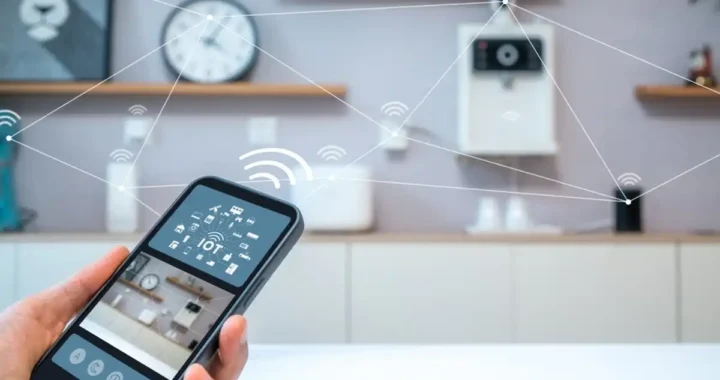
Smart homes are one of the most familiar applications of IoT sensors. Modern connected homes can contain sensors for temperature, motion, light, humidity, doors, windows, smoke, water leaks, and other conditions.
A smart home system can use this information to automate everyday tasks. For example, motion sensors can detect when people enter or leave rooms. Temperature sensors can provide information for smart climate-control systems. Door and window sensors can contribute to security monitoring, while water-leak sensors can alert homeowners to potential problems.
The real value comes from connecting these sensors to other devices. A sensor can detect an event, software can interpret it, and another device can respond automatically. This creates an environment where technology reacts to real-world conditions rather than simply waiting for a person to control it manually.
IoT Sensors in Healthcare
Healthcare is another important area where connected sensors are being used. Wearable devices can collect information related to movement, activity, temperature, and other measurable signals. Connected medical equipment can also provide information to healthcare systems.
The broader goal is to improve monitoring and provide useful information to authorized professionals and users. Instead of relying only on occasional measurements, connected devices can potentially provide more continuous information.
However, healthcare IoT requires strong privacy, security, reliability, and regulatory protections because health-related information can be highly sensitive. Sensor technology can be valuable, but it must be implemented responsibly.
IoT Sensors in Agriculture
Agriculture can benefit significantly from IoT sensors because environmental conditions have a major effect on crops and livestock. Farmers can use connected sensors to monitor soil moisture, temperature, humidity, weather conditions, water levels, and other factors.
A soil-moisture sensor, for example, can provide information about how much water is available in the soil. An irrigation system can use that information to determine when watering may be needed. This approach can help reduce unnecessary water usage while supporting more informed agricultural management.
IoT technology can also support greenhouse monitoring, livestock tracking, equipment management, and environmental observation. By collecting information continuously, farmers can gain a clearer picture of changing conditions.
IoT Sensors in Manufacturing
Manufacturing is one of the most important areas for IoT sensors. Factories contain machines that operate continuously and often require careful monitoring. Sensors can measure vibration, temperature, pressure, speed, energy consumption, and other machine conditions.
This information can support predictive maintenance. Instead of waiting for a machine to fail, organizations can analyze sensor data for signs of unusual behavior. A change in vibration or temperature, for example, may indicate that equipment requires inspection.
IoT sensors can also support production monitoring, quality control, energy management, inventory systems, and workplace safety. When combined with analytics and automation, sensor data can help manufacturing facilities become more connected and responsive.
IoT Sensors in Smart Cities
Smart cities use connected technologies to monitor and manage urban infrastructure. IoT sensors can be used for traffic monitoring, parking systems, environmental monitoring, waste management, street lighting, water systems, and public infrastructure.
For example, connected parking sensors can provide information about available parking spaces. Traffic sensors can collect information about vehicle movement, while environmental sensors can monitor air quality.
The goal is not simply to collect large amounts of data. The real purpose is to turn that data into useful information that can help city systems operate more efficiently and provide better services.
IoT Sensors in Transportation and Logistics
Transportation and logistics companies can use IoT sensors to monitor vehicles, cargo, routes, and environmental conditions. Sensors can track location, temperature, vibration, fuel-related information, and other operational measurements.
For temperature-sensitive products, connected sensors can help monitor conditions during transportation. If the temperature moves outside an acceptable range, an alert can be generated.
Vehicle sensors can also support fleet management. Companies can monitor vehicle conditions and usage patterns, potentially helping them identify maintenance needs and improve operational efficiency.
The Role of IoT Gateways
Not every sensor connects directly to the internet. In many IoT architectures, sensors communicate with an IoT gateway. The gateway acts as an intermediary between local devices and wider networks.
An IoT gateway may collect information from multiple sensors, process the data, convert communication protocols, and forward selected information to a cloud platform or server. This can be particularly useful when many sensors are deployed in the same environment.
Gateways can also help reduce network traffic by processing information locally. Instead of sending every raw measurement to the cloud, the gateway may filter or summarize data before transmitting it.
Edge Computing and IoT Sensors
Edge computing has become increasingly important for IoT because some applications require rapid responses. Instead of sending every piece of sensor data to a remote cloud server, processing can take place closer to the source of the data.
For example, an industrial system may analyze machine sensor data locally and immediately identify an abnormal condition. This can reduce latency and allow the system to respond more quickly.
Edge computing can also reduce bandwidth requirements and provide greater resilience when internet connectivity is limited. Cloud computing and edge computing are often used together rather than being treated as completely separate approaches.
IoT Sensors and Artificial Intelligence
IoT sensors generate data, while artificial intelligence can help analyze that data and identify patterns. This combination is often described as AIoT, or the convergence of artificial intelligence and the Internet of Things.
A sensor might collect vibration data from industrial machinery. An AI system can analyze historical and real-time measurements to identify unusual patterns. Over time, the system may become better at recognizing conditions associated with equipment problems.
Similarly, smart buildings can combine sensor information with intelligent software to optimize energy use. The combination of connected sensing and advanced analytics creates opportunities for more automated and responsive systems.
Benefits of IoT Sensors
One of the biggest benefits of IoT sensors is automation. Sensors can continuously monitor conditions without requiring a person to manually collect every measurement. This can save time and allow workers to focus on tasks that require human judgment.
Another benefit is real-time monitoring. Organizations can receive information as conditions change instead of waiting for scheduled inspections. Faster access to information can support faster responses.
IoT sensors can also improve efficiency. By understanding how equipment, buildings, vehicles, and other systems are operating, organizations can identify unnecessary resource consumption and potential areas for improvement.
Predictive maintenance is another important benefit. Sensor data can help organizations identify unusual conditions before they become serious failures. This can potentially reduce downtime and maintenance costs.
IoT sensors can also improve safety. Connected devices can monitor hazardous conditions and generate alerts when measurements exceed predefined limits. In some applications, automated systems can respond immediately.
Challenges of IoT Sensors
Despite their benefits, IoT sensors also have challenges. One major challenge is security. Every connected device can potentially become part of an organization’s digital attack surface. Poorly protected IoT devices may create security vulnerabilities.
Organizations therefore need to use strong authentication, encryption, secure software, regular updates, network segmentation, and appropriate access controls. Security should be considered from the beginning of an IoT project rather than added after deployment.
Data privacy is another concern. Some IoT devices collect information that may reveal personal behavior, location, habits, or other sensitive details. Organizations need clear policies regarding what data is collected, why it is collected, how long it is stored, and who can access it.
Reliability is also important. Sensors may operate in difficult environments involving heat, moisture, dust, vibration, or other conditions. A sensor that produces inaccurate measurements can lead to poor decisions.
Battery life can be another limitation. Many IoT sensors are installed in remote or difficult-to-access locations. Replacing batteries frequently can be expensive and inconvenient, so energy efficiency is an important part of IoT sensor design.
Accuracy and Calibration of IoT Sensors
Sensor accuracy directly affects the quality of an IoT system. If a sensor provides incorrect information, the software may make incorrect decisions.
Calibration helps ensure that sensor measurements remain accurate. Depending on the type of sensor and application, calibration may need to happen regularly or whenever specific conditions change.
Environmental factors can also influence measurements. Temperature, humidity, electromagnetic interference, physical positioning, and sensor aging may affect performance. Therefore, organizations need to consider the operating environment when selecting and maintaining sensors.
IoT Sensor Data Management
Collecting data is only one part of an IoT project. Organizations also need to manage the information effectively. Large IoT deployments can generate enormous quantities of data.
Not every measurement needs to be stored permanently. Systems may use filtering, aggregation, compression, or event-based reporting to reduce unnecessary data. For example, a sensor may transmit information only when a significant change occurs instead of sending identical measurements every second.
Good data management helps control storage and network costs while making analysis more efficient. It also supports better privacy and governance practices.
Choosing the Right IoT Sensor
Selecting the right sensor depends on the application. Organizations should consider what needs to be measured, how accurately it needs to be measured, how frequently data must be collected, and where the sensor will operate.
Power requirements are also important. A battery-powered sensor may need extremely low energy consumption, while a factory sensor connected to a permanent power source may have different requirements.
Communication range, environmental durability, cost, installation requirements, maintenance needs, and compatibility with existing systems should also be considered.
The cheapest sensor is not always the most suitable choice. A sensor that produces unreliable data or requires frequent maintenance can create greater costs over time.
The Future of IoT Sensors
The future of IoT sensors is closely connected with developments in artificial intelligence, edge computing, wireless communication, robotics, automation, and energy-efficient electronics. Sensors are becoming smaller, smarter, and more capable.
Future IoT devices may perform more processing locally rather than sending all information to centralized servers. This can support faster decision-making and reduce communication requirements.
Advances in low-power technologies may also allow sensors to operate for longer periods without battery replacement. Energy harvesting could provide another way to power certain sensors by capturing energy from sources such as light, heat, movement, or vibration.
Sensor fusion is another important trend. Instead of relying on one sensor, systems can combine information from multiple sensors to create a more complete understanding of an environment. A smart vehicle, for example, may combine information from cameras, radar, GPS, accelerometers, and other sensors.
Why IoT Sensors Will Continue to Matter
IoT sensors are likely to remain a fundamental part of connected technology because the physical world is constantly changing. Digital systems need information about those changes to make useful decisions.
Whether the goal is managing energy in a building, monitoring industrial machinery, tracking products, improving agriculture, supporting healthcare, or developing smart cities, sensors provide the data required to understand real-world conditions.
The importance of IoT sensors is therefore not limited to the hardware itself. Their real value comes from the complete system surrounding them. A sensor collects information, networks transport it, software processes it, analytics interpret it, and people or automated systems use the resulting information to take action.
Conclusion
Understanding how IoT sensors work and why they matter provides a useful foundation for understanding the broader Internet of Things. IoT sensors connect the physical and digital worlds by detecting environmental and physical changes and transforming those changes into data that connected systems can understand.
From temperature and humidity sensors to motion, pressure, light, sound, location, and vibration sensors, different technologies support different IoT applications. These sensors are already being used in smart homes, healthcare, agriculture, manufacturing, transportation, logistics, and smart cities.
Their greatest value comes from their ability to collect information continuously and connect that information with software and automated systems. When combined with cloud computing, edge computing, artificial intelligence, and modern communication technologies, IoT sensors can support automation, monitoring, efficiency, predictive maintenance, and faster responses.
At the same time, successful IoT deployments require careful attention to security, privacy, accuracy, reliability, power consumption, and data management. As connected technology continues to develop, IoT sensors will remain a fundamental building block for systems that need to understand and respond to the physical world.
For businesses, technology professionals, researchers, and everyday users, learning about IoT sensors is therefore more than learning about a particular piece of hardware. It is about understanding how modern connected systems gather information, transform it into useful knowledge, and use that knowledge to make technology more responsive and intelligent.